Choosing among the top Kilimanjaro tour operators in 2026 can feel overwhelming. With hundreds of companies offering similar promises, the real difference comes down to safety standards, group size, acclimatization strategy, ethics, and summit philosophy.
This expert comparison guide breaks down what truly separates the best Kilimanjaro tour company from average operators — so you can make a confident, informed decision.
What Separates the Best Kilimanjaro Tour Operators in 2026?
1. Safety Infrastructure
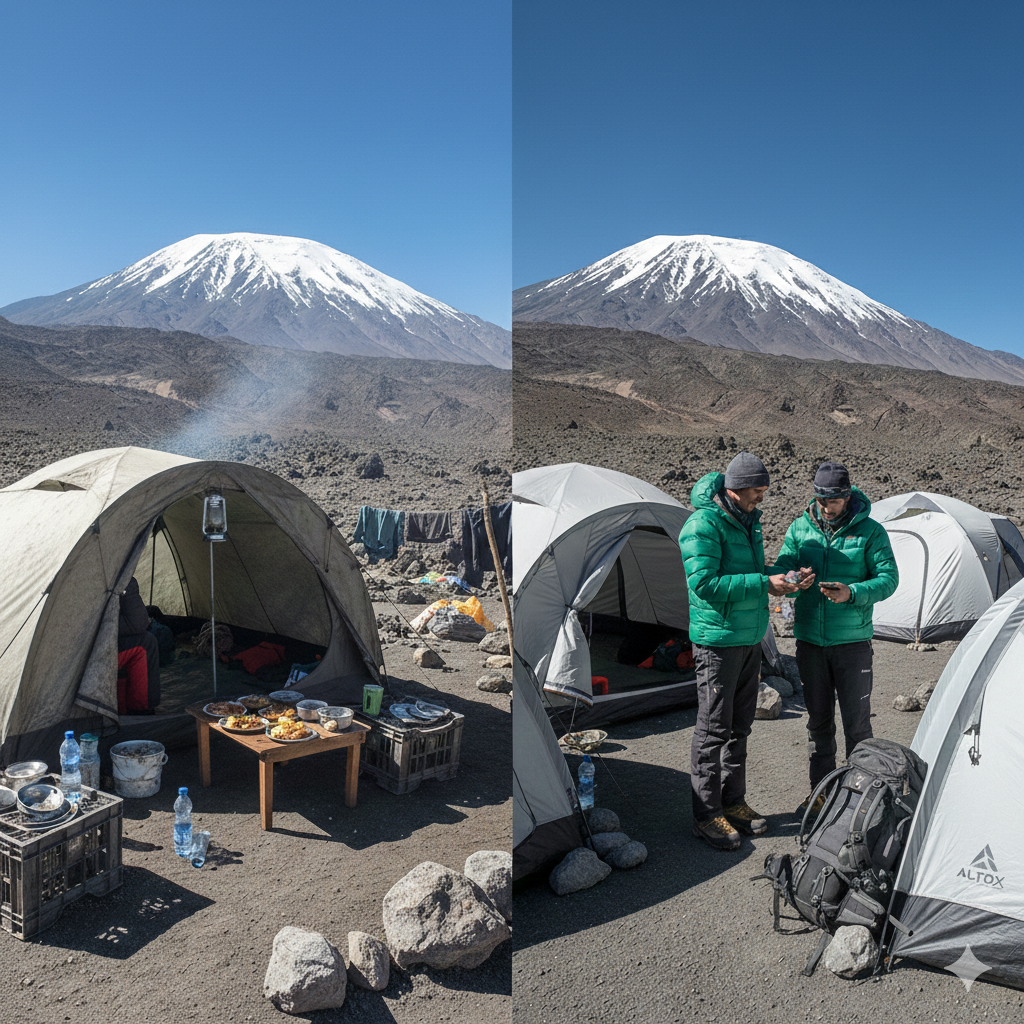
Top operators provide:
- Twice-daily pulse oximeter checks
- Emergency oxygen on every climb
- Wilderness First Responder (WFR) trained guides
- Clear evacuation protocols
- Satellite communication systems
If oxygen and health monitoring are “available upon request,” that’s a red flag.
2. Group Size Policy
Group size dramatically impacts safety and summit success.
| Group Size | Impact on Experience |
|---|---|
| 10–15 climbers | Slower monitoring, less personalization |
| 6 climbers or fewer | Better pacing, stronger safety oversight |
The best Kilimanjaro tour operators in 2026 are shifting toward small, premium groups.
3. Route & Itinerary Strategy
Not all itineraries are created equal.
Premium operators focus on:
- 7–8 day minimum itineraries
- Strategic acclimatization days
- High-camp positioning (such as Kosovo Camp)
- Conservative summit pacing
Budget operators often offer 5–6 day routes, increasing altitude risk.
4. Ethical Standards (KPAP Membership)
Responsible operators are members of KPAP (Kilimanjaro Porters Assistance Project) and:
- Enforce porter weight limits
- Provide proper gear
- Ensure fair wages
- Maintain safe working conditions
Ethical trekking isn’t optional — it’s foundational.
5. Summit Success Rate — And How It’s Calculated
A reputable company shares transparent summit statistics based on 7–8 day climbs, not rushed itineraries.
High summit success should reflect smart acclimatization not summit pressure.
2026 Operator Comparison Snapshot
| Criteria | Budget Operator | Top 2026 Operator |
| Duration | 5–6 days | 7–8 days |
| Group Size | 10–15 climbers | 6 max |
| Oxygen | Limited | Included |
| Health Checks | Minimal | Twice daily |
| KPAP | Often unclear | Verified |
| Acclimatization | Basic | Strategically designed |
The difference in infrastructure directly impacts safety and success.
Why Many Climbers Choose Climb Kili in 2026
When comparing the top Kilimanjaro tour operators in 2026, many climbers prioritize companies that combine small group size, safety-first protocols, and ethical standards.
Climb Kili stands out because:
- Maximum 6 climbers per group
- 7–8 day itineraries only
- Strategic high-camp use (including Kosovo Camp)
- Twice-daily medical monitoring
- Emergency oxygen on every climb
- KPAP-verified porter treatment
- U.S. and Tanzania-based support teams
Safety is never compromised for speed.
How to Choose the Right Operator for You
Before booking, ask:
- Is safety clearly outlined?
- How many days is the itinerary?
- What is the group size cap?
- Are health checks included?
- Is the operator KPAP verified?
- Is summit success based on proper acclimatization?
The best Kilimanjaro tour company for you is one that aligns with your priorities — safety, success, and
integrity.
Related Kilimanjaro Research & Planning Resources
If you’re comparing the top Kilimanjaro tour operators in 2026, you may also find these in-depth guides helpful when narrowing your decision:
- Best Kilimanjaro Guides – What certifications and experience truly matter on summit day
- Best Kilimanjaro Route – A detailed breakdown of route safety, acclimatization, and scenery comparisons:
- Best Kilimanjaro Tour Company – What separates premium expedition teams from budget operators:
- Best Kilimanjaro Tour Operators – Safety standards, infrastructure, and summit strategy compared:
- Best Kilimanjaro Tours – What’s included in high-quality 7–8 day expeditions:
- Kilimanjaro Lemosho Route Guide – Why the 8-day Lemosho route offers superior acclimatization:
- Kilimanjaro Machame Route Guide – A closer look at the 7-day Machame route profile:
- Mt Kilimanjaro Bookings Guide – What to know before securing your climb and avoiding hidden costs:
Final Thoughts
Comparing the top Kilimanjaro tour operators in 2026 isn’t about finding the cheapest option — it’s about choosing the safest, most ethical, and most professionally structured expedition.
Climb smart. Ask detailed questions. And choose a company that treats your summit — and its crew — with the respect it deserves.
Tutaonana juu ya mlima (See you on the mountain) 💚🏔️